Chingaza National Park: How to Visit the Páramo from Bogotá
You can't just show up at Chingaza. You need a booking made at least three days ahead, an authorized guide, accident insurance and a vehicle, and day visitors must enter by 11 a.m. Non-resident foreigners pay COP 78,500 in 2026. The easiest way to visit is with an authorized agency that handles all of it.
| Location | Eastern Andes, northeast of Bogotá, in the departments of Cundinamarca and Meta |
|---|---|
| Altitude | 800 to 4,020 m (2,600 to 13,200 ft); the páramo trails at Monterredondo run from 3,200 to 3,800 m |
| Permits | Booking at least 3 days ahead, an authorized guide and accident insurance are all mandatory |
| Hours | Day-visit entry 7:00 to 11:00 a.m.; everyone out by 4:00 p.m. |
| 2026 fee | COP 78,500 for non-resident foreigners; COP 29,000 for Colombians and residents over 25 |
| Getting there | Private vehicle or agency transport only, via La Calera, Guasca or Fómeque; no public transport |
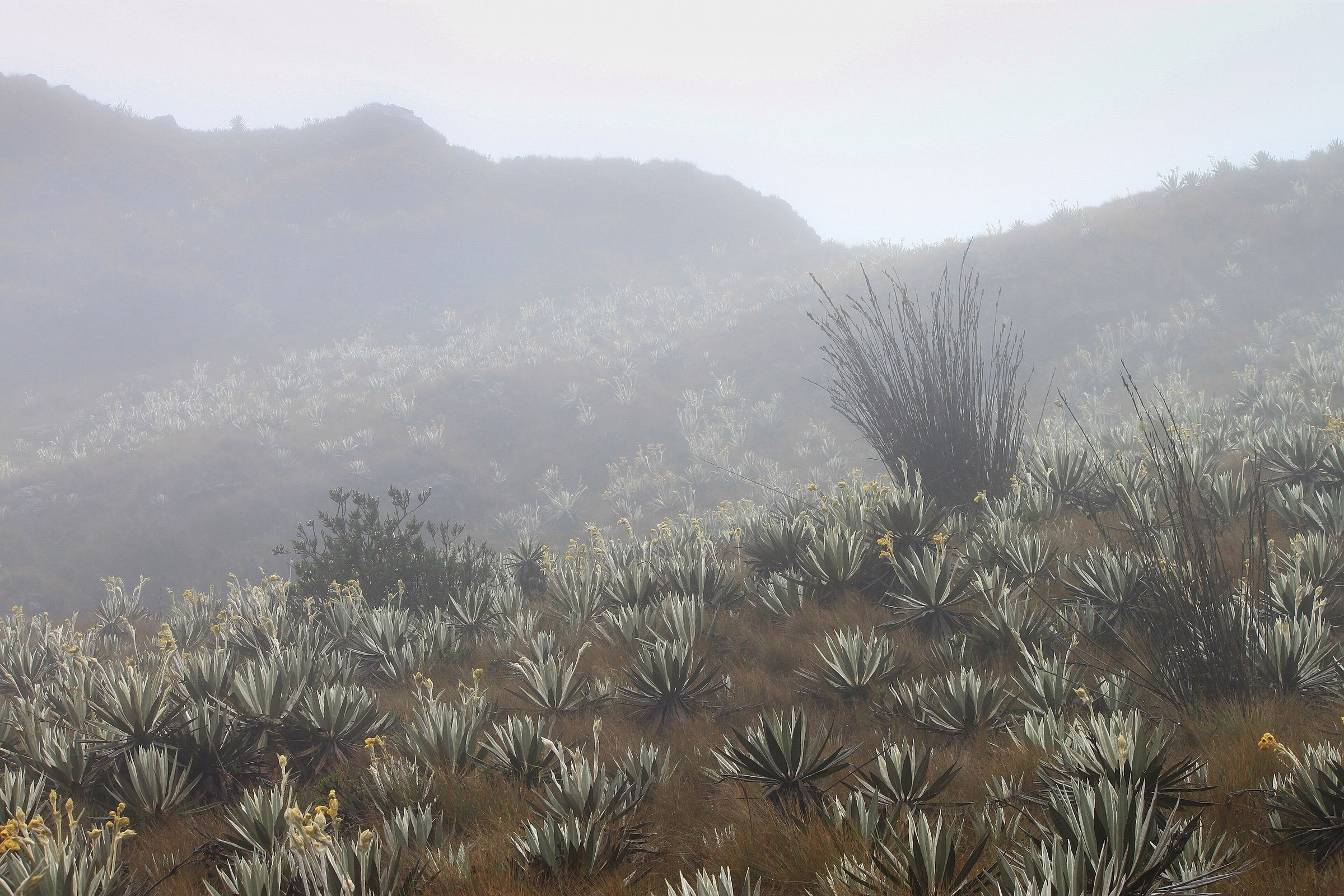
Chingaza is the big páramo national park northeast of Bogotá: high Andean moorland full of frailejones, glacial lagoons and the reservoirs that supply most of the capital’s water. It’s also one of Colombia’s more tightly controlled parks, so you can’t simply drive up and start hiking. We ran birdwatching trips in Chingaza in 2022 and 2023. This guide covers what you actually need to get in, with every rule and price checked against Parques Nacionales Naturales sources in October 2026.
What Chingaza is, and why Bogotá guards it
Chingaza National Natural Park was declared in 1977 and covers about 76,600 hectares of the Eastern Andes, spread across seven municipalities in Cundinamarca and four in Meta. It runs from 800 meters on the edge of the eastern plains up to 4,020 meters, through Andean forest and into the páramo.
If you haven’t met a páramo before, it’s the cold, wet, high-altitude grassland found above the treeline in the northern Andes. Its signature plant is the frailejón (Espeletia), a woolly, silver-leaved rosette on a thick trunk that looks a little like a giant artichoke, and in Chingaza whole hillsides are covered with them. The páramo soaks up rain and fog and releases it slowly, which is why this one matters so much. The Chingaza System, with the Chuza and San Rafael reservoirs, provides about 70% of the drinking water for Bogotá and several nearby towns, according to Bogotá’s city government. When the reservoirs ran low in 2024, the city went through water rationing that lasted into 2025. That’s the context for the strict rules.
The rules: you can’t just show up
These are the conditions Parques Nacionales publishes for Chingaza:
- Book at least three days ahead through the park’s official form. The form is open Monday to Friday, 7 a.m. to 5 p.m. (Colombia time).
- An authorized guide is mandatory. You hire one through an agency on the park’s official list (the April 2026 version has more than 30) or through Corpochingaza, the community organization that runs services inside the park.
- Accident insurance is mandatory.
- One sector per day only, because of the distances and the weather.
- No entry on foot, by bike or by motorbike. You need a car or agency transport.
- Banned: single-use plastics, pets, drones, alcohol, campfires and smoking. The speed limit inside is 40 km/h with headlights on, and photos are for personal use only.
The booking steps go like this. You fill in the form, the park emails you payment details, you pay the entrance fee online, you hire a guide and buy insurance, and you send the payment receipt at least 48 hours before your visit. On the day, you show up at the checkpoint with your guide, receipt and insurance for registration and a short induction. The official booking documents are in Spanish, and payment goes through PSE, Colombia’s bank-transfer system, which is set up for Colombian bank accounts.
For most foreign visitors, the realistic option is an authorized agency that handles the whole package. Several on the official list bundle the booking, entrance fee, insurance, guide and transport from Bogotá, and several advertise guides who speak English (a few also offer French, Italian or Portuguese).
Which trail to pick
As of October 2026 the park is listed as open, with seven authorized trails. The distances and times below come from the park’s official trail sheets, published in 2013, so treat them as a guide and check with your agency.
| Trail | Checkpoint (access town) | Distance | Time | Difficulty |
|---|---|---|---|---|
| Lagunas de Siecha | Siecha (Guasca) | 5.18 km | 3.5 h | Moderate |
| Cuchillas de Siecha | Piedras Gordas (La Calera) | 7.4 km | 5 h | Hard |
| Lagunas de Buitrago | Piedras Gordas (La Calera) | 5.2 km | 2.5 h | Easy |
| Laguna Seca | Piedras Gordas (La Calera) | 1.85 km | 1 h | Easy |
| Suasie | Monterredondo (La Calera) | 1.3 km | 1.5 h | Moderate |
| Plantas del Camino–Laguna de Chingaza | La Paila (Fómeque) | 4.5 km | 2.5 h | Easy |
A seventh trail, De los Sentidos, is listed by the park as accessible.
Lagunas de Siecha is the one most people come for: a chain of lagoons the Muisca people treated as sacred and walked to in homage to water. Cuchillas de Siecha is the long, demanding version along the ridge, with views of three glacial lagoons; the park says it’s done with community guides because of its length and difficulty. Lagunas de Buitrago is good for frailejones, and its two lagoons drain to different sides of the continent, one toward the Orinoco and the other toward the Magdalena. Suasie crosses Andean forest and páramo where spectacled bears live, with a view over the Chuza reservoir. The Laguna de Chingaza trail was closed for a while after a wildfire in the La Paila sector in January 2025. It’s back on the official list, but confirm it’s open when you book.
Getting there from Bogotá
There are three main ways in, all on unpaved roads for the last stretch. The park recommends a 4x4, especially in the rainy season and on the Guasca and Fómeque roads.
- Via La Calera, a town just over the eastern hills from Bogotá: 22 km past town to the Piedras Gordas checkpoint, then 28 km more to Monterredondo. The park estimates about an hour by car from La Calera to Piedras Gordas.
- Via Guasca, for the Siecha lagoons: 15 km from town to the Siecha checkpoint.
- Via Fómeque, for Laguna de Chingaza: 26 km to the La Paila checkpoint.
Day visitors must enter between 7:00 and 11:00 a.m. (until 11:30 if you’re staying overnight), and everyone is out by 4:00 p.m., so expect a very early start from Bogotá. Unless you’re comfortable driving rough mountain roads in Colombia, let the agency drive.
2026 fees
These are the official rates on the park’s page, checked on October 5, 2026. They match the 2026 rates set by Parques Nacionales’ Resolution 551 of 2025.
- Non-resident foreigners: COP 78,500
- Colombians, foreign residents and Andean Community citizens over 25: COP 29,000
- Same group, ages 5 to 25: COP 24,500
- Vehicle: COP 21,000 per car, COP 54,000 per minibus, COP 113,000 per bus
The guide, insurance, transport and meals are priced by each agency, so ask for the all-in total before you pay.
Altitude, weather and what to pack
Parques Nacionales describes a cold high-mountain climate, between 4 °C and 21 °C (about 39 °F to 70 °F). It rains more from April to November and less from December to February, and fog can roll in at any time. The páramo trails in the Monterredondo sector sit between 3,200 and 3,800 meters, higher than Bogotá. If you’ve just landed in Colombia, give yourself a day or two in the city before you go, walk slowly, and if you have a heart or lung condition, ask your doctor first. The park also asks visitors to report any respiratory illness at check-in.
The park’s own packing list: hiking boots for high-mountain trails, warm clothes, a rain jacket, sunscreen, a cap, water and biodegradable toiletries. We’d add layers rather than one heavy coat, because sun and fog take turns quickly, and a reusable container for your snacks, since single-use plastics aren’t allowed in. The nearest health centers are in La Calera and Guasca.
Birds and wildlife
Parques Nacionales records 531 bird species and 101 mammal species in the park, including the spectacled (Andean) bear, white-tailed deer, puma and Andean condor, plus páramo specialists such as the bearded helmetcrest hummingbird and the Bogotá rail. Our trips were guided walks of about three hours with a bilingual guide, plus a two-day version with a night at an eco-lodge. The species we went looking for included the Brown-breasted Parakeet (Pyrrhura calliptera), the Golden-fronted Redstart and the condor. No one can promise sightings, but if birds are the point of your trip, say so when you book: several agencies on the official list specialize in birding.
Where to stay and who to go with
Corpochingaza runs the hostel (beds in shared rooms), the campsites and the restaurant at Monterredondo, inside the park. The park’s nature-tourism portfolio also lists locally run lodges outside the park, near Guasca, Fómeque, La Calera and Choachí.
We no longer sell tours, but if you want help choosing an authorized agency based on the trail, the guide’s language or your group, get in touch. And if Chingaza’s dates don’t line up with your trip, the Neusa reservoir area north of Bogotá also has páramo with frailejones, and it’s where we used to run páramo hikes.
Mistakes to avoid, and who it’s not for
- Arriving after 11 a.m. Day-visit entry closes then.
- Planning the Siecha lagoons and Laguna de Chingaza on the same day. It’s one sector per day, and they’re reached from different towns.
- Taking a low-clearance rental car up the Guasca or Fómeque roads in the rainy season.
- Forgetting the insurance or payment receipt. Without them you won’t be registered.
- Bringing a drone, a dog or plastic water bottles. All are banned.
Chingaza isn’t for spontaneous plans or for hikers who want to roam on their own: you always go with a guide, on authorized trails, on fixed hours. If that suits you, it’s one of the best ways to see a real páramo close to Bogotá. For more ideas, browse our nature guides.
Sources
- Chingaza National Natural Park, Parques Nacionales Naturales de Colombia: status, trails, booking, hours, fees, rules and directions (checked October 5, 2026).
- ABC for visiting PNN Chingaza (PDF, 2025): altitude, access routes, booking procedure and recommendations (checked October 5, 2026).
- PNN Chingaza booking step by step (PDF) (checked October 5, 2026).
- Authorized agencies for PNN Chingaza (PDF, April 2026) (checked October 5, 2026).
- Chingaza nature-tourism portfolio (PDF, 2025) (checked October 5, 2026).
- Official trail sheets (2013): Lagunas de Siecha, Cuchillas de Siecha, Lagunas de Buitrago, Laguna Seca, Suasie and Plantas del Camino–Laguna de Chingaza (checked October 5, 2026).
- PNN Chingaza ecotourism activities and wildlife pages (checked October 5, 2026).
- PNN Chingaza description (PDF, 2015): driving time from La Calera to Piedras Gordas (checked October 5, 2026).
- Parques Nacionales: Plantas del Camino trail closed after the La Paila wildfire (January 17, 2025) (checked October 5, 2026).
- Parques Nacionales: Chingaza Fest 2026 (June 19, 2026): altitude of the Monterredondo trails (checked October 5, 2026).
- Bogotá city government: towns that depend on the Chingaza System (June 14, 2024) (checked October 5, 2026).
- Bogotá city government: Chingaza reservoir levels after rationing (June 14, 2025) (checked October 5, 2026).
- Semana: 2026 entrance fees for Colombia’s national parks (Resolution 551 of 2025) (checked October 5, 2026).
Questions travelers ask
- Do you need a guide to visit Chingaza National Park?
- Yes. Parques Nacionales requires every visitor to go with an authorized guide and to carry accident insurance, and you won't be let in without them. The park publishes its list of authorized agencies on its official page.
- How much does it cost to visit Chingaza?
- The 2026 entrance fee is COP 78,500 for non-resident foreigners and COP 29,000 for Colombians and residents over 25, plus COP 21,000 per car (official rates, checked October 2026). The guide, insurance and transport are paid separately to the agency.
- Can you get to Chingaza by public transport?
- No. There's no public transport into the park, and entering on foot, by bike or by motorbike isn't allowed. You need a car (a 4x4 is recommended in the rainy season) or an agency that includes transport.
- How high is Chingaza?
- The park spans 800 to 4,020 meters. The páramo trails in the Monterredondo sector run from 3,200 to 3,800 meters, so take it slowly if you've just arrived in Colombia.
- Which trail should I choose?
- The Siecha lagoons trail (5.18 km, about three and a half hours) is the classic choice. For something gentler, the trail to Laguna de Chingaza is rated easy in the park's official trail sheet.