Suesca Rock Climbing: A Practical Guide from Bogotá
Suesca is Colombia's best-known climbing area: a sandstone cliff beside the Bogotá River, about 60 km north of the capital, with more than 500 sport and trad routes. Aim for the drier months (December–February or June–August). If you're new to climbing, book a certified guide; a guided day runs about USD 65–135 per person.
| Where | Suesca, Cundinamarca, about 60 km north of Bogotá |
|---|---|
| Getting there | 1–1.5 h by car; Alianza buses from Bogotá's Terminal del Norte every 15–30 min |
| Altitude | 2,584 m (town) |
| Rock and routes | Sandstone; 500+ sport and trad routes, 5.6 to 5.13c, up to 5 pitches |
| Best months | December–February and June–August (the drier seasons) |
| Guided day | About USD 65–135 per person, gear included (checked October 2026) |
| Entry | Free to walk in; the Reserva El Turpial sector charges climbers |
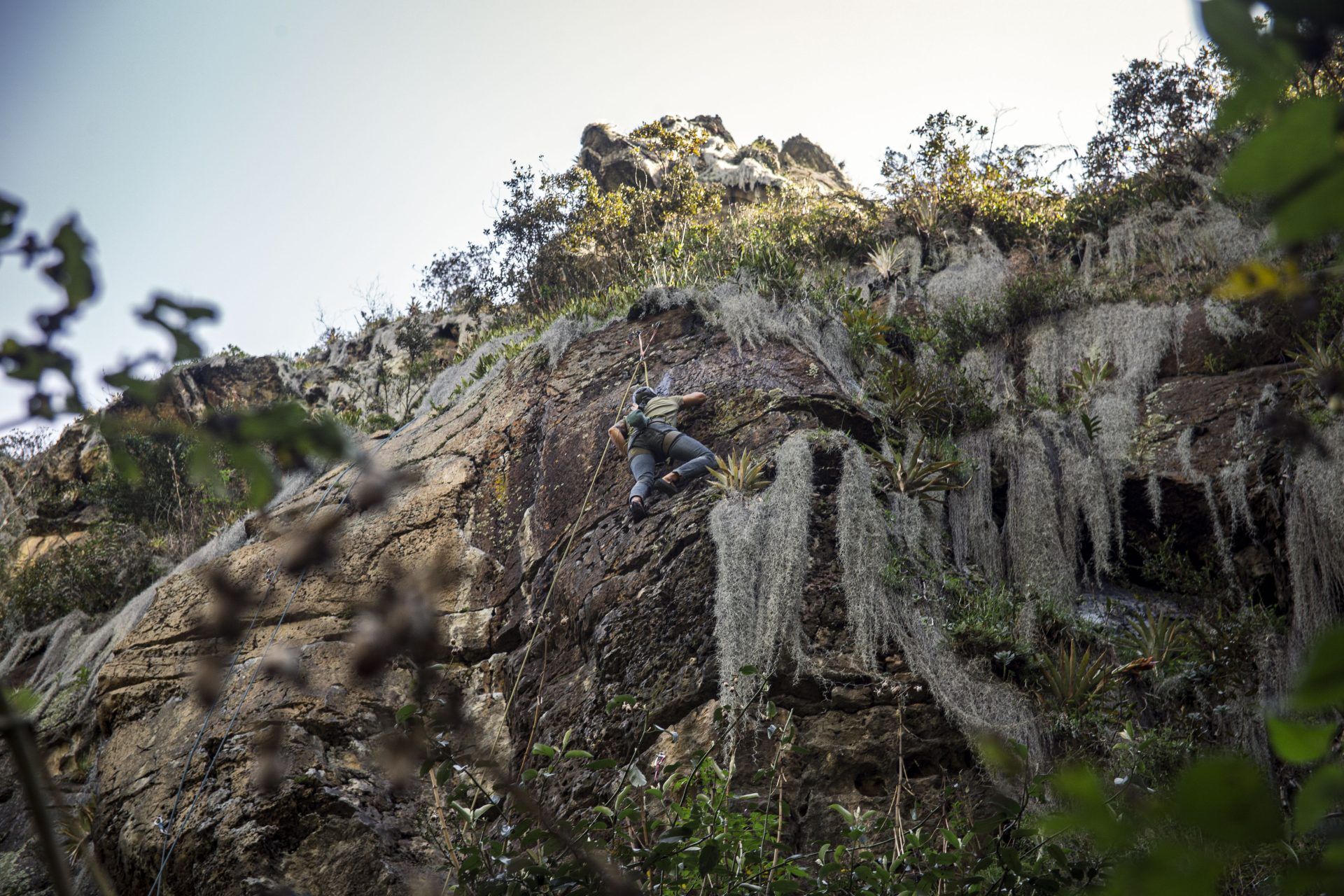
Suesca is where generations of Colombian climbers learned the sport, and it’s still the country’s best-known crag. Mountain Project traces climbing here back about 80 years. The appeal for a visitor is simple: it’s a long sandstone cliff a bus ride from Bogotá, with routes for every level and guides who know them well.
Between 2022 and 2023 we ran our own climbing day here. These days we don’t sell tours; we refer travelers to local guides. This guide covers what we’d tell a friend before they go.
What climbing at Suesca is like
The Rocas de Suesca are one long escarpment, roughly 3 to 4 km of cliff, running along the Bogotá River and a railway line just before you reach the town. Mountain Project counts more than 500 routes, graded 5.6 to 5.13c, with lines up to five pitches (about 150 m). theCrag gives a lower figure, more than 400. Either way, you won’t run out of rock in a week.
A few things catch visitors off guard:
- It’s trad country. theCrag describes the cliff as mostly trad, with some sport routes and bouldering, and suggests carrying at least a set of nuts even if you only plan to clip bolts.
- The grades are old school. Expect stiff grades, mixed protection and little route information on the ground. The Wandering Climber also warns that some first bolts sit far off the ground.
- The rock is good. It’s hard sandstone that dries fast after a shower; theCrag says it’s climbable in the rain.
- The tallest walls are at the eastern end, inside the Reserva El Turpial, where faces top 120 m (Fundación Edenes de Colombia).
The town sits at 2,584 m. If you fly into Bogotá and head straight out, take the walk-in slowly and drink water.
Getting there from Bogotá
By car. Head north on the Autopista Norte toward Tunja, pay two tolls and take the Suesca turnoff. It’s about 60 km. Mountain Project calls it an hour; older guides say an hour and a half. Traffic on the Autopista Norte decides which. Parking near the entrance to the rocks costs around COP 7,000 (Chip Viajero, updated May 2026).
By bus. Transportes Alianza runs Bogotá–Suesca from the Terminal del Norte (Autopista Norte at Calle 193, next to TransMilenio’s Terminal station), with departures every 15 to 30 minutes from 5:30 a.m. You’ll still see older guides saying to catch the bus at Portal Norte; the official departure point is now the Terminal del Norte. The fare is around COP 10,000–11,000 one way (Mountain Project; Chip Viajero, May 2026), and the ride takes about an hour and a half.
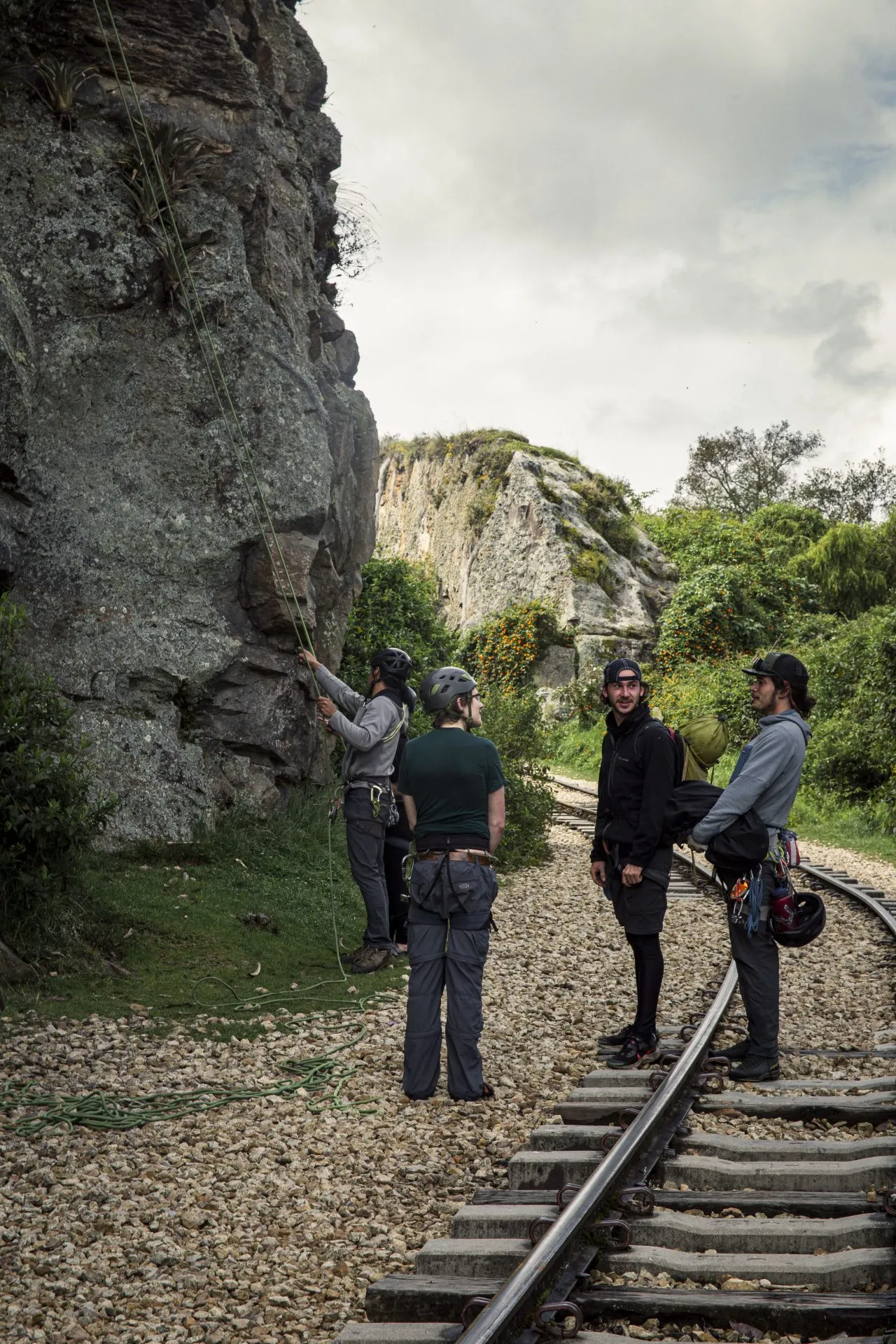
Ask the driver to drop you at la entrada de las rocas, which comes about 2 km before the town center. From there you walk roughly 1 km along the railway tracks to the cliff. If you ride all the way into town, you’ll have to walk back.
With a guide. Operators such as Suescalada and Colombia Oculta can arrange a private car from Bogotá. Suescalada lists USD 140 (COP 400,000) round trip for 1–4 people.
What a guided day looks like
When we ran our Suesca climbing day, the plan was: pickup in Bogotá at 7:00 a.m., a local breakfast in Suesca around 9:00, walking to the first route at 10:15, a picnic lunch at the rocks at 12:30, more climbing in the afternoon, and heading back to Bogotá at 4:30 p.m. We capped groups at six, included all the gear, and had the guide pick routes to match the group. Most guided days still follow about that rhythm.
Prices from operators that publish them
Checked October 2026, per person:
| Operator | Plan | Price per person |
|---|---|---|
| Suescalada (bilingual guide, foreigner rate) | Half day, max. 4 people | USD 115 (solo) to USD 65 (group of 4) |
| Suescalada (bilingual guide, foreigner rate) | Full day, about 9 a.m. to 5 p.m. | USD 135 (solo) to USD 77 (group of 4) |
| Colombia Oculta | About 4 hours of climbing | COP 366,000 (solo) to COP 151,000 (3–4 people) |
Suescalada includes the gear (harness, helmet, rope, climbing shoes), a sandwich lunch and accident insurance. Colombia Oculta includes the guide, adventure-sports insurance and certified harness, helmet and rope, but not climbing shoes (COP 10,000 extra) or the El Turpial entrance. Group size matters more than anything else: going solo costs almost twice as much per person as going with three friends.
How to choose a guide (and stay safe)
Climbing is a real risk activity, so check these before you pay a deposit:
- Ask for the operator’s RNT number and safety certificate. Since Resolution 0612 of 2024, adventure tourism providers in Colombia must hold a safety certification at the “outstanding” level, issued by a body accredited by ONAC, Colombia’s national accreditation agency. Local authorities can cancel an operator’s tourism registration for up to five years (MinCIT, June 2025).
- Check the guide, not just the company. The Colombian Association of Mountain and Climbing Guides (ACGME) publishes a list of the rock-climbing guides and aspiring guides it recognizes.
- Expect paperwork. Serious operators ask for a medical information form and include accident insurance.
- Look at the gear on the day. Helmets on for everyone at the base, not just the climber, and a guide who checks your knot and harness before every route.
Entry fees and rules
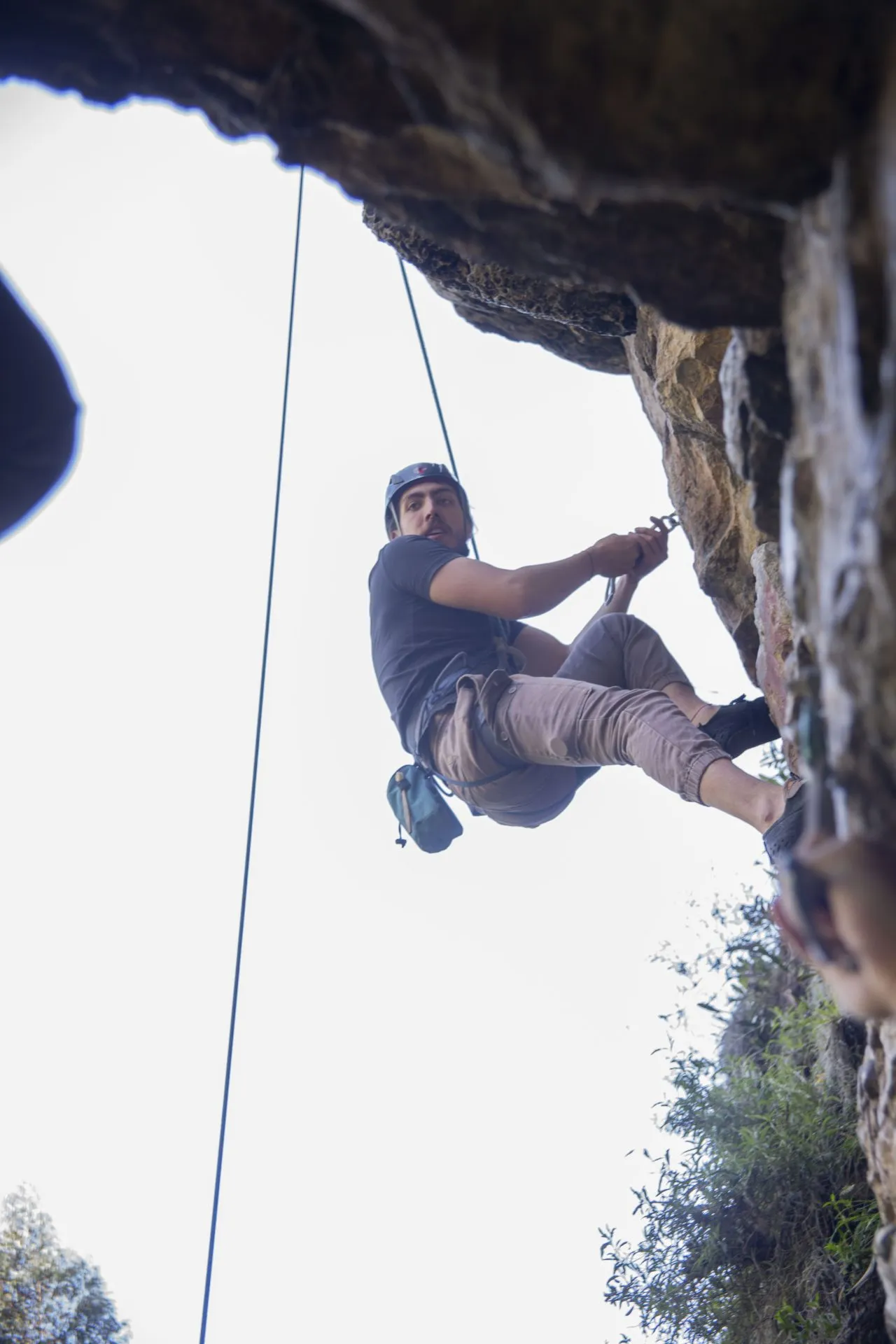
Most of the cliff is free to walk to (Chip Viajero, May 2026). The exception is the Reserva El Turpial, a 4.78-hectare reserve at the eastern end of the cliff. It’s registered in the national parks service’s network of private nature reserves (Resolution 148 of 2017). It holds the tallest walls and many of the best-known routes, and it charges climbers to enter. Fees change, so ask your guide whether it’s included or pay at the reserve’s entrance. Inside the reserve, climbing through heavily vegetated sections isn’t allowed.
When to go and what to bring
Suesca shares the rain pattern of nearby Bogotá: two wetter seasons (March–May and September–November) and two drier ones (December–February and June–August). Climbers aim for the dry months. Rain is still possible any time, but the rock dries quickly. Nights get cold, so bring a warm layer if you’re camping.
On our old tour we told people to bring comfortable, stretchy clothes plus warm and waterproof layers. Add sunscreen, water and a snack. If you’re not with a guide who provides shoes, you can rent climbing shoes locally.
Beyond climbing: other things to do in Suesca
- Walk the length of the cliff. Suescalada’s guided hike covers 8 km in about 3.5 hours (easy to moderate), passing pre-Hispanic pictographs, with views toward the Tominé reservoir.
- Via ferrata. A 70 m route to the top of the rocks for people who’ve never climbed: 3–4 hours, COP 130,000–265,000 per person depending on group size (Suescalada, October 2026).
- Ride to Cucunubá. We used to recommend the mountain bike route from Suesca past the rocks and Lake Suesca to the old town of Cucunubá: about 24 km, roughly two hours.
- Lake Suesca. The Muisca kept a shrine at this lake on the municipality’s north-western edge.
Who Suesca isn’t for, and mistakes to avoid
If you want a polished sport crag with bolts every two meters and a topo for every line, Suesca will frustrate you. It suits trad climbers, and beginners who are happy to go with a guide.
- Leading without trad experience. The grades are stiff and the protection is mixed. Hire a guide for your first day, even if you lead at the gym.
- Getting off the bus in town. Ask for the rocks’ entrance.
- Booking solo without comparing. Prices drop a lot per person with three or four people.
- Assuming every sector is free. Ask about El Turpial before you walk in.
If you’re planning more days out from Bogotá, see our adventure guides, Chingaza National Park and the Neusa Reservoir.
Want help booking?
We no longer run this day ourselves. Tell us your dates, group size and level on Plan your trip and we’ll connect you with a local guide.
Sources
- Mountain Project: Suesca (route count, grades, elevation, directions, bus). Checked October 2026.
- theCrag: Suesca (character of the crag, protection, rock). Checked October 2026.
- The Wandering Climber: Suesca climbing guide (seasons, bolting). Checked October 2026.
- Wikipedia (Spanish): Suesca (altitude, distance, length of the cliff, Lake Suesca). Checked October 2026.
- Wikipedia (English): Suesca (driving route and time). Checked October 2026.
- Transportes Alianza: destinations (Bogotá–Suesca schedule). Checked October 2026.
- Alcaldía de Bogotá: Terminal del Norte opens (location, TransMilenio connection). Checked October 2026.
- Chip Viajero: Cómo llegar a las Rocas de Suesca (bus fare, drop-off, free access, parking; updated May 2026). Checked October 2026.
- Suescalada: half-day and full-day climbing, via ferrata, cliff hike (prices). Checked October 2026.
- Colombia Oculta: Escalada Rocas de Suesca (prices, inclusions). Checked October 2026.
- Fundación Edenes de Colombia: Reserva El Turpial (reserve, fees, rules). Checked October 2026.
- MinCIT: safety certification for adventure tourism providers (Resolution 0612 of 2024). Checked October 2026.
- ACGME: recognized guides. Checked October 2026.
- Aragón-Moreno, J. A. and Lerma-Lerma, B. D. (2019), Análisis espacio temporal (1981–2010) de la precipitación en la ciudad de Bogotá, Revista Facultad de Ingeniería (rainy and dry seasons). Checked October 2026.
Questions travelers ask
- Is Suesca good for beginners?
- Yes, with a guide. Operators run days for first-timers, starting on very easy routes, with all the gear included. Climbing on your own is a different matter: the grades are old school and much of the protection is trad, so you need real experience to lead here.
- How do I get to Suesca from Bogotá by bus?
- Take TransMilenio to Terminal station and catch a Transportes Alianza bus to Suesca from the Terminal del Norte next door. The ride takes about an hour and a half. Ask the driver to let you off at la entrada de las rocas, before the town, and walk about 1 km along the railway to the cliff.
- Do you have to pay to climb at Suesca?
- Walking to the rocks is free. The exception is the Reserva El Turpial, a private nature reserve at the eastern end of the cliff where the tallest walls are, which charges climbers to enter. Ask your guide whether that fee is included.
- When is the best time to climb in Suesca?
- December to February and June to August, the two drier seasons on the Bogotá savanna. It can still rain, but the sandstone dries quickly.
- How much does a guided climbing day in Suesca cost?
- In October 2026, Suescalada listed USD 65–115 per person for a half day and USD 77–135 for a full day with a bilingual guide, depending on group size. Colombia Oculta listed COP 151,000–366,000 per person for about four hours of climbing.