Usaquén, Bogotá: Flea Market, Colonial Square and Where to Eat
Usaquén is a former colonial town in north Bogotá, absorbed by the city in 1954 and still built around its old square and the Santa Bárbara church. Go on a weekend for the flea market (Saturdays, Sundays and holiday Mondays, 9 a.m. to 5:30 p.m.), book a taxi through an app, and stay for lunch.
| Where | North Bogotá, around Carrera 6 and Calle 119 (Usaquén locality) |
|---|---|
| Part of Bogotá since | 1954; historic center declared a national monument in 1987 |
| Flea market | Sat, Sun and holiday Mondays, 9:00 a.m. to 5:30 p.m. (market website, checked October 2026) |
| Cost | Free to walk the square and the market |
| Getting there | Taxi booked through an app, or an SITP bus heading north on Carrera 7 |
| Landmark | Santa Bárbara church, Calle 118 # 5-84 (parish founded in 1665) |
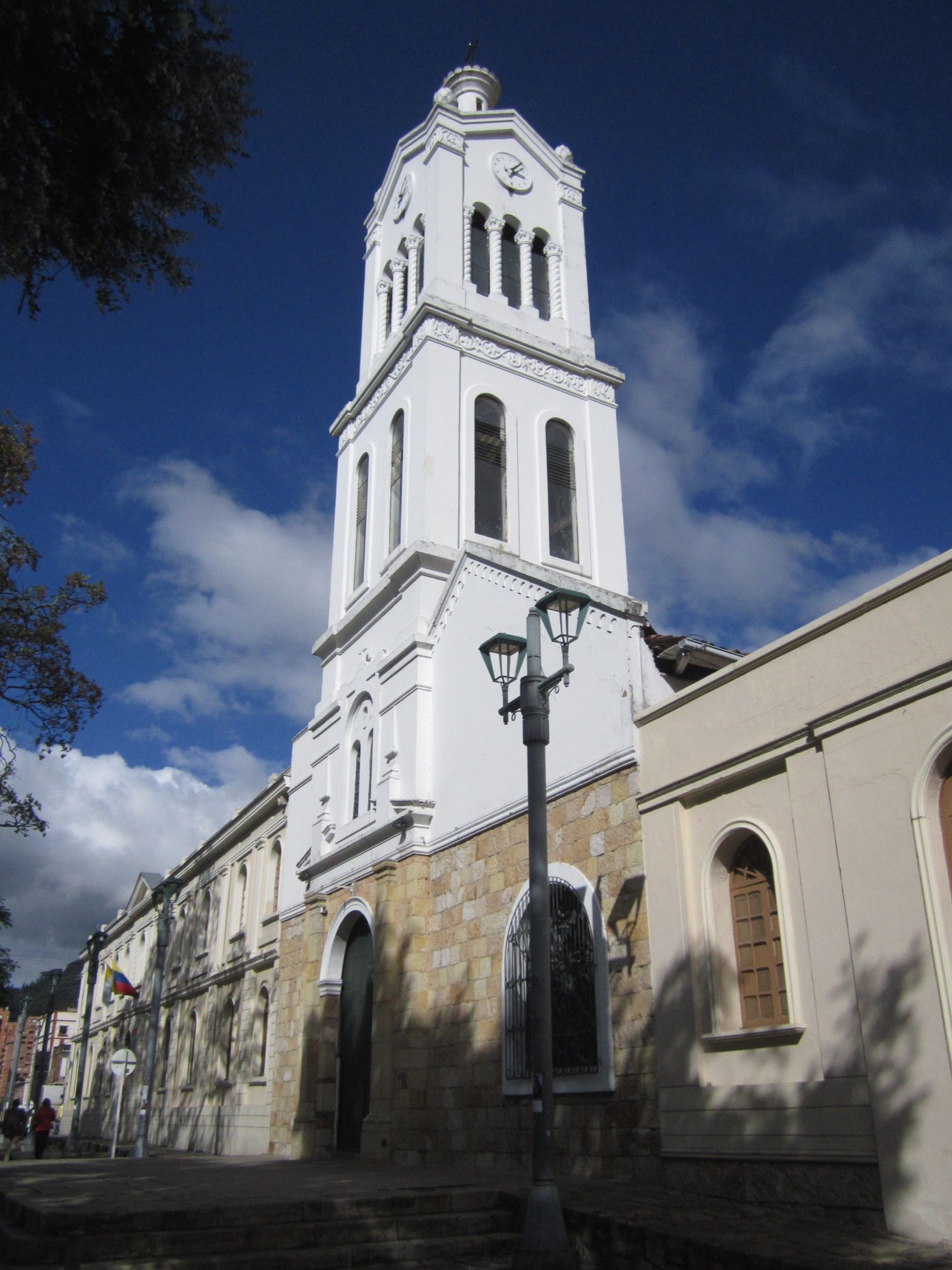
Usaquén is the part of Bogotá that still looks like a small town. It has a square with a white church, low colonial-style houses, cobbled streets and, every weekend, a flea market that fills several blocks with crafts and food. It sits in the north of the city, a long way from La Candelaria, so it takes a bit of planning. We think it’s worth the trip, especially on a Sunday.
What Usaquén is
Usaquén was a separate town long before it was part of Bogotá. The Spanish founded it around 1539 as Santa Bárbara de Usaquén, and the name comes from a Muisca word that Bogotá’s district government translates as “land of the sun.” The Santa Bárbara parish was founded in 1665 to evangelize the Muisca people living there, according to Visit Bogotá, the city’s tourism office. The church still stands on the east side of the main square.
The town was absorbed into Bogotá in 1954, and its historic center was declared a national monument in 1987. That’s why the few blocks around the square feel so different from the apartment towers and avenues around them. Today Usaquén is also the name of the whole northern localidad (district), so when people in Bogotá say “Usaquén” for a day out, they mean this historic core.
The Usaquén flea market
The Mercado de las Pulgas de Usaquén started in 1990. According to its own website, it now runs every Saturday, Sunday and holiday Monday from 9:00 a.m. to 5:30 p.m., on Carrera 6A between Calles 119 and 120A (checked October 2026). Older city pages describe it as a Sunday market, and Sunday is still the day it’s known for.
What you’ll find, according to Visit Bogotá: handmade jewelry, ceramics, textiles, pieces made from recycled materials, antique furniture, vintage clothing and art, plus stalls selling Colombian coffee and traditional desserts. Entry is free.
Go in the morning. The market closes at 5:30 p.m., and you’ll want time for lunch and for the side streets, which is where the old houses are.
How to get to Usaquén
Usaquén is roughly 12 km north of Plaza de Bolívar in a straight line, and the ride is slower than that number suggests. Since February 2026, Carrera 7 between Calles 99 and 200 has been under construction for a new TransMilenio corridor, and that stretch runs right past Usaquén. Give yourself an hour from La Candelaria to be safe, a bit less from Chapinero.
Taxi or ride-hailing app
This is the easiest option. The UK Foreign Office advises against hailing taxis on the street in Colombia and recommends booking well-known taxi companies through apps like Uber or Cabify, or through your hotel. Ask to be dropped at the Parque de Usaquén, Carrera 6 with Calle 119.
Public transport
Visit Bogotá recommends taking an SITP bus north along Carrera 7 and using the Hacienda Santa Bárbara shopping center (Carrera 7 # 115-60) as your landmark, then walking a few blocks toward the eastern hills. The TransMilenio trunk line on the Autopista Norte has a station at Calle 115 (Pepe Sierra), but it’s far to the west of the square, so it only makes sense if you’re happy to walk or switch buses. Use the TransMilenio app or Google Maps to pick the route on the day.
By bike on a Sunday
On Sundays and holidays from 7:00 a.m. to 2:00 p.m., part of Carrera 7 becomes Ciclovía, the city’s car-free route network. That changes traffic for taxis, but it also means you can ride most of the way north. Since June 7, 2026, the Carrera 7 Ciclovía detours along Calle 92 and Carrera 15 between Calles 92 and 116 because of the same roadworks. We explain how it works in our Bogotá bike tour guide.
What to see in Usaquén
- The main square and the Santa Bárbara church (Calle 118 # 5-84). Visit Bogotá lists Sunday masses at 8, 9 and 10 a.m., noon, 6 and 7:30 p.m. You can step in between them, quietly.
- The side streets around Carrera 6 and Calle 119B, with the old houses. ProColombia, the national tourism board, sums the area up well: narrow streets, crafts, bars and restaurants.
- The flea market, on weekends (see above).
- The tourist train station. If you’re planning a separate day for Zipaquirá, the Tren Turístico de la Sabana stops at its Usaquén station (Avenida Carrera 9 # 110-08) on Saturdays, Sundays and holidays, leaving at 9:15 a.m. and getting back to Usaquén at 4:45 p.m. Its website listed adult tickets at COP 96,000 (checked October 2026). That plan takes the whole day, so you’d miss the market.
Where to eat in Usaquén
The streets around the square are packed with cafés, bars and restaurants serving both Colombian and international food, so you won’t go hungry. The question our travelers ask is where to try proper Colombian food.
That’s where we send them: Arriero’s Grill, at Carrera 6 # 119B-52, a block from the square. It’s a Colombian restaurant and grill with a long menu of regional dishes: ajiaco (Bogotá’s chicken and potato soup), bandeja paisa, sancocho, posta cartagenera and grilled meats. On its menu, updated in September 2026, the ajiaco with chicken was COP 47,400 and the bandeja paisa COP 62,300 (checked October 2026). On weekends it opens early for breakfast staples like changua and calentao. It also has live music and karaoke (ask which nights when you book), and it’s pet friendly. Its website says weekend breakfast starts at 8 a.m., while Google lists 9 a.m., so message them on WhatsApp before you go early.
Disclosure: Arriero’s Grill is one of our partners, and we may earn a commission when we send travelers there.
Safety in Usaquén
The district government lists the Usaquén flea market among Bogotá’s most visited places, and crowds are where petty thieves work. Don’t let the small-town look switch off your city instincts. The UK Foreign Office warns that pickpocketing, mugging and armed robbery are a problem in major Colombian cities, including Bogotá, and advises not displaying phones, cameras or laptops. It also warns about criminals drugging victims, including with scopolamine, through food, drinks, cigarettes and even flyers, and about people using dating apps to lure foreigners.
In practice, at Usaquén that means:
- Keep your phone in a front or zipped pocket in the market crowds, and don’t leave it on the restaurant table.
- Book your ride home through an app, especially after dark.
- Don’t accept drinks, snacks or samples from strangers.
- Carry only the cash you plan to spend.
Mistakes to avoid
- Going on a weekday for the market. There’s no market Monday to Friday (except holiday Mondays). The neighborhood is still pleasant, but it’s a different plan.
- Treating it as a quick stop. With traffic and roadworks on Carrera 7, the ride north can take far longer than the distance suggests. Plan Usaquén as a half day.
- Taking TransMilenio and expecting to be next door. The trunk stations are on the Autopista Norte, far from the square.
- Only walking the stalls. The square, the church and the streets uphill are the reason Usaquén feels like a town.
If you want help fitting Usaquén into a longer trip, tell us your dates on our plan your trip page. You’ll find more places like this in our destinations section.
Sources
- Asociación Mercado de las Pulgas de Usaquén, official website: days, hours and location (checked October 5, 2026)
- Visit Bogotá: Usaquén Flea Market: hours, founding year, how to get there (checked October 5, 2026)
- Bogotá.gov.co: Historia y horarios de los mercados de las pulgas (March 2022; checked October 5, 2026)
- Visit Bogotá: Santa Bárbara de Usaquén Parish: founding date, address, mass times (checked October 5, 2026)
- Secretaría de Gobierno de Bogotá: Usaquén, tierra del sol: founding, name, 1954 annexation, 1987 monument (July 2025; checked October 5, 2026)
- Bogotá.gov.co: Historia del poblamiento de Usaquén (checked October 5, 2026)
- Colombia Travel (ProColombia): Usaquén (checked October 5, 2026)
- Bogotá.gov.co: Obras del Corredor de la carrera Séptima, calles 99 a 200 (January 2026; checked October 5, 2026)
- IDRD: Ciclovía de Bogotá and IDRD: new Ciclovía route along Carrera 15 (June 2026; checked October 5, 2026)
- Wikipedia: Pepe Sierra (TransMilenio) (checked October 5, 2026)
- Turistren: Tren Turístico de la Sabana: Usaquén station, schedule and fares (checked October 5, 2026)
- Arriero’s Grill, official website and menu (menu updated September 2026; checked October 5, 2026)
- UK Foreign Office: Colombia safety and security (checked October 5, 2026)
Questions travelers ask
- When is the Usaquén flea market open?
- The Mercado de las Pulgas de Usaquén lists Saturdays, Sundays and holiday Mondays, 9:00 a.m. to 5:30 p.m., on Carrera 6A between Calles 119 and 120A (checked October 2026). Sunday is the classic day to go. On weekdays the stalls are not there.
- How do I get to Usaquén from La Candelaria?
- The simplest way is a taxi booked through an app such as Uber or Cabify, which the UK Foreign Office recommends over hailing one on the street. On public transport, take an SITP bus north along Carrera 7. TransMilenio's trunk line stops on the Autopista Norte, so you'd still have a long walk east.
- Is Usaquén safe for tourists?
- The usual city rules apply here too: pickpocketing and robbery are a problem across Bogotá, according to the UK Foreign Office, and the weekend market draws big crowds. Keep your phone out of sight in the market crowds, don't accept drinks or food from strangers, and book taxis through an app.
- Where can I eat typical Colombian food in Usaquén?
- We send travelers to Arriero's Grill, a block from the square, for ajiaco, bandeja paisa and weekend breakfasts. It's a partner of ours, so we may earn a commission. The streets around the square are full of other cafés and restaurants.
- Is Usaquén worth visiting?
- Yes, if you can go on a weekend. It's the easiest place in Bogotá to see what a Sabana town square looked like before the city swallowed it, and the flea market makes it a half-day plan. On a weekday you get the square and the restaurants without the market.